For many families, a NASC assessment can feel unfamiliar or even intimidating. Often, it’s mentioned during a stressful time — after a health change, a hospital stay, or growing concerns about safety at home — without much explanation of what it actually involves.
This article explains what usually happens during a NASC assessment, why it’s used, and how it fits into the wider aged care funding system in New Zealand.
What Is a NASC Assessment?

A NASC assessment is carried out by a Needs Assessment and Service Coordination (NASC) organisation. These organisations help determine whether a person may be eligible for publicly funded aged care support.
Most government-funded home and community support is overseen by Te Whatu Ora – Health New Zealand, with NASC organisations acting as the main entry point to that support.
The purpose of the assessment is to understand how someone is managing in their day-to-day life and whether additional help might be appropriate.
Why NASC Assessments Are Used?
Aged care funding in New Zealand is usually based on assessed need, rather than age, income, or diagnosis alone.
A NASC assessment helps:
- Build a clear picture of someone’s current situation
- Identify risks or challenges at home
- Determine whether funded support may be appropriate
- Decide what type of support could be considered
It’s a way for the health system to allocate support fairly, based on individual circumstances.
Where Does the Assessment Take Place?
In many cases, a NASC assessment is carried out:
- In the person’s home, or
- By phone or video, depending on circumstances
The setting is chosen to help assessors understand how someone is managing in their usual environment.
What Does the Assessor Usually Ask About?
The assessment focuses on daily living rather than medical treatment. The assessor may ask questions about:
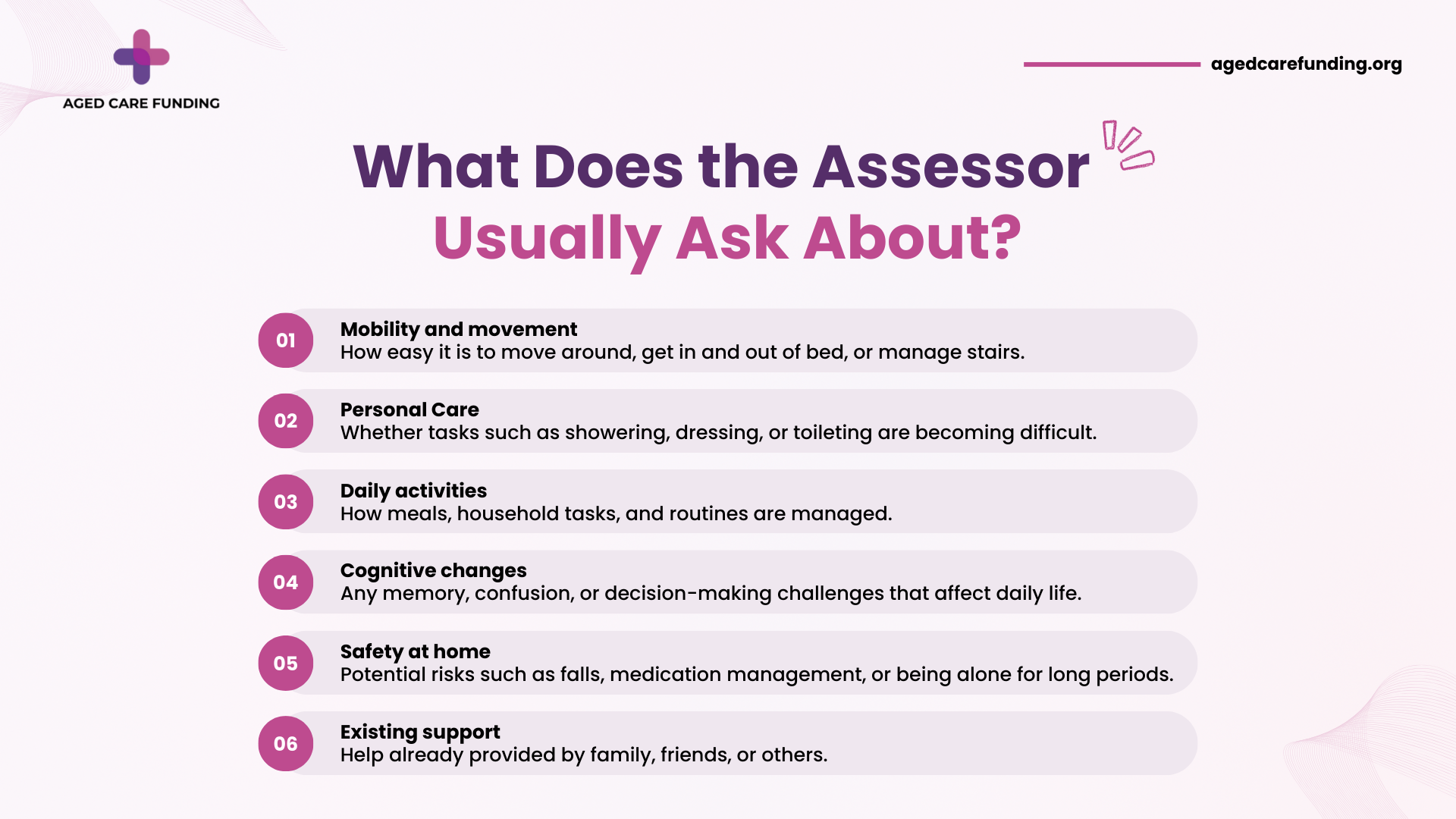
The goal is to understand the overall picture, not to “test” or judge the person being assessed.
Does the Assessment Focus Only on Problems?
Not necessarily. Assessors usually look at:
- What someone can do independently
- Where support is already working well
- What areas may need extra help
This balanced approach helps ensure that any support considered is appropriate and proportionate.
What Happens After the Assessment?
After the assessment, several outcomes are possible. Depending on the situation, a person may:
- Be offered short-term support
- Be considered for ongoing support
- Not be offered funded support at that time
The outcome depends on assessed need and eligibility criteria at that point in time. Needs can change, and assessments can be revisited if circumstances change.
Why the Process Can Feel Unclear?
Many families say NASC assessments feel confusing because:
- The process isn’t always explained clearly upfront
- Information is shared during stressful periods
- Different services and organisations are involved
- Outcomes aren’t guaranteed
Feeling unsure or anxious about the process is very common.
A Helpful Way to Prepare

Because eligibility depends on individual circumstances, many people find it useful to start with a general eligibility check before or alongside formal assessments.
A free eligibility checker can help you:
- Understand whether a NASC assessment may be relevant
- Learn which funding pathways might apply
- Feel more prepared when navigating next steps
It’s intended as a starting point, not a decision-maker.
Important Note
Information about NASC assessments is general in nature. Eligibility and outcomes depend on individual circumstances and usually require formal assessment through a NASC organisation. Support availability can change over time.