One of the most common questions families ask once support is mentioned is whether aged care funding is temporary or ongoing. Some people worry support will stop suddenly, while others assume it will continue indefinitely once it starts.
In reality, aged care funding can be time-limited or ongoing, depending on individual circumstances. This article explains how duration is usually considered in New Zealand, why support is reviewed, and what families often experience over time.
Why This Question Comes Up Early?
Uncertainty about how long support lasts can make planning difficult. Families often ask:
- “Will this stop after a few weeks?”
- “Is this permanent once it’s approved?”
- “What happens if things change?”
Because the system doesn’t always explain this clearly upfront, many people are left guessing.
How Duration of Support Is Usually Decided
Aged care funding is typically based on current assessed need, rather than fixed timeframes.
Most publicly funded home and community support is overseen by Te Whatu Ora – Health New Zealand, with eligibility assessed through Needs Assessment and Service Coordination (NASC) processes.
Assessments look at:
- How someone is managing now
- Whether support is needed short term or longer term
- How circumstances may change over time
Because needs can change, support arrangements are often reviewed.
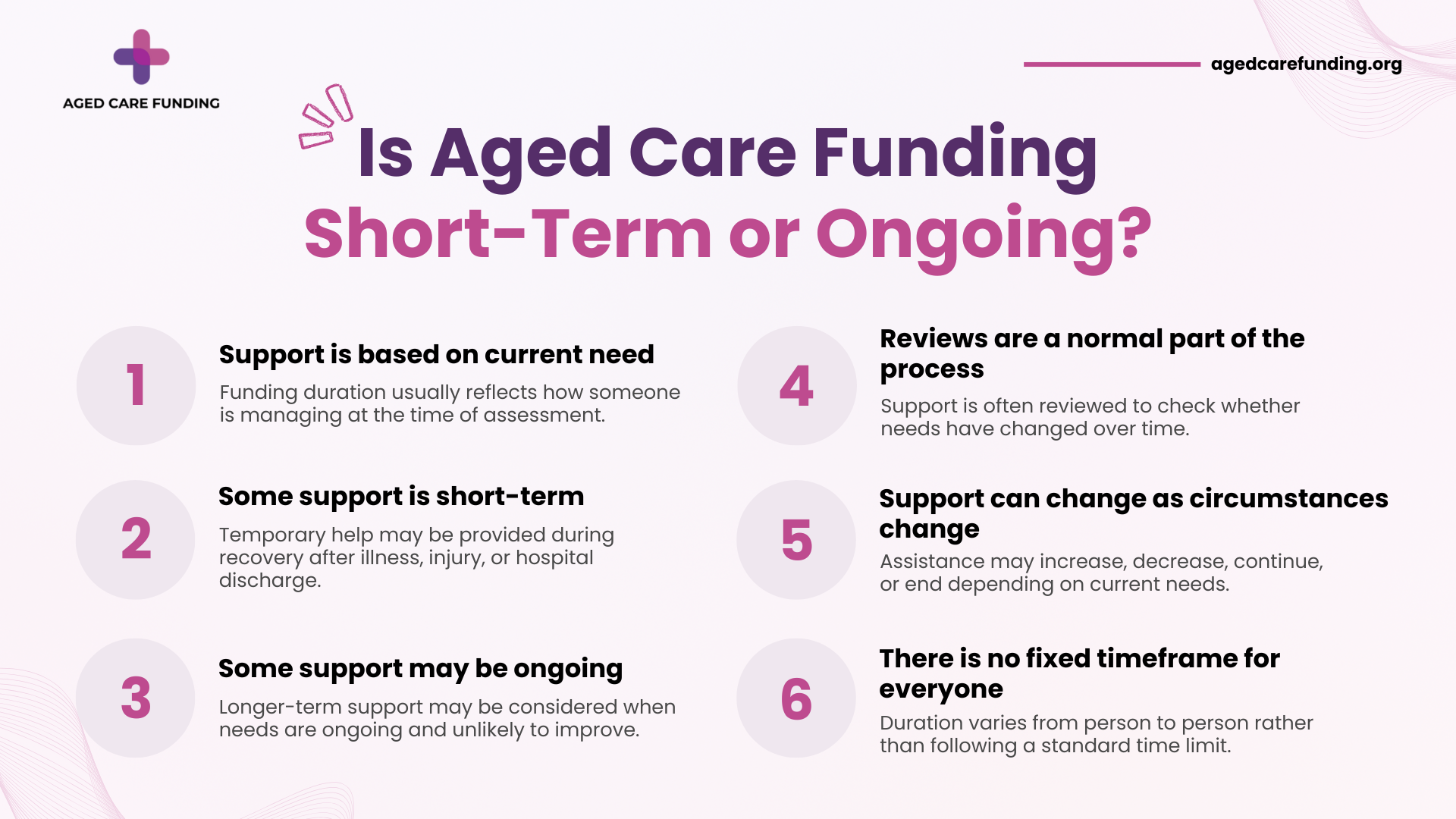
When Support Is Often Time-Limited
Some aged care funding is designed to be short term, particularly when:
- Someone is recovering after illness or surgery
- Support is needed after hospital discharge
- Temporary help is required to regain independence
In these cases, support is usually reviewed after a set period and may end if recovery progresses.
When Support May Be Ongoing
Ongoing support may be considered when:
- Long-term health or mobility changes affect daily living
- Safety risks remain over time
- Independence cannot be maintained without assistance
Even ongoing support is usually reviewed periodically to ensure it still reflects current needs.
Why Reviews Are a Normal Part of the Process
Reviews are not a sign that support will automatically stop. They exist to:
- Check whether needs have changed
- Adjust support levels if appropriate
- Ensure assistance remains relevant
Support may increase, decrease, or continue depending on circumstances.
Why People Worry Support Will Suddenly End

This concern often comes from:
- Lack of clear explanations at the start
- Fear of losing stability once support begins
- Confusion between short-term and long-term pathways
Understanding that reviews are expected — and not a punishment — can help reduce anxiety.
A Practical Way to Understand What Might Apply
Because duration depends on individual circumstances, many people find it helpful to start with a general eligibility check.
A free eligibility checker can help:
- Clarify whether support is more likely to be short term or ongoing
- Set realistic expectations early
- Reduce uncertainty before assessments or reviews
It’s designed to provide clarity, not guarantees.
Important Note
Information about the duration of aged care funding is general in nature. Whether support is time-limited or ongoing depends on individual circumstances and usually requires formal assessment and review through the public health system.