Many families don’t realise that government-funded support may be available to help older people remain living at home in New Zealand. Others assume they won’t qualify — or feel overwhelmed trying to understand where to start.
If you’re supporting an ageing parent, or navigating this yourself, you’re not alone. The aged care funding system can feel complex, unclear, and difficult to navigate. This article explains how government-funded home care works in New Zealand, who it may be available for, and how eligibility is usually determined.
What Is Government-Funded Home Care?

In New Zealand, some home-based support services are funded through the public health system. These services are designed to help older people maintain safety, independence, and wellbeing at home for as long as possible.
Support may include help with:
- Daily activities
- Personal care
- Household tasks
- Short-term recovery after a hospital stay
Funding is not automatic and is not based on income alone. Instead, eligibility is usually assessed through a formal process.
Who Provides Aged Care Funding in New Zealand?
Most government-funded home care for older people is coordinated through:
- Te Whatu Ora – Health New Zealand
- Needs Assessment and Service Coordination (NASC) organisations
Not everyone will be eligible, and support levels can vary. Funding is not automatic and does not work the same way for every person.
What Is a NASC Assessment?
A NASC assessment looks at how a person is managing day-to-day life and whether support may be needed to stay safe and independent at home.
An assessment may consider:
- Mobility and physical health
- Cognitive changes
- Ability to manage personal care
- Support already available from family or friends
- Safety risks at home
Assessments are typically carried out in the person’s home or over the phone, depending on circumstances.
Importantly, a NASC assessment does not guarantee funded support. It is a way to understand needs and determine what, if any, assistance may be available.
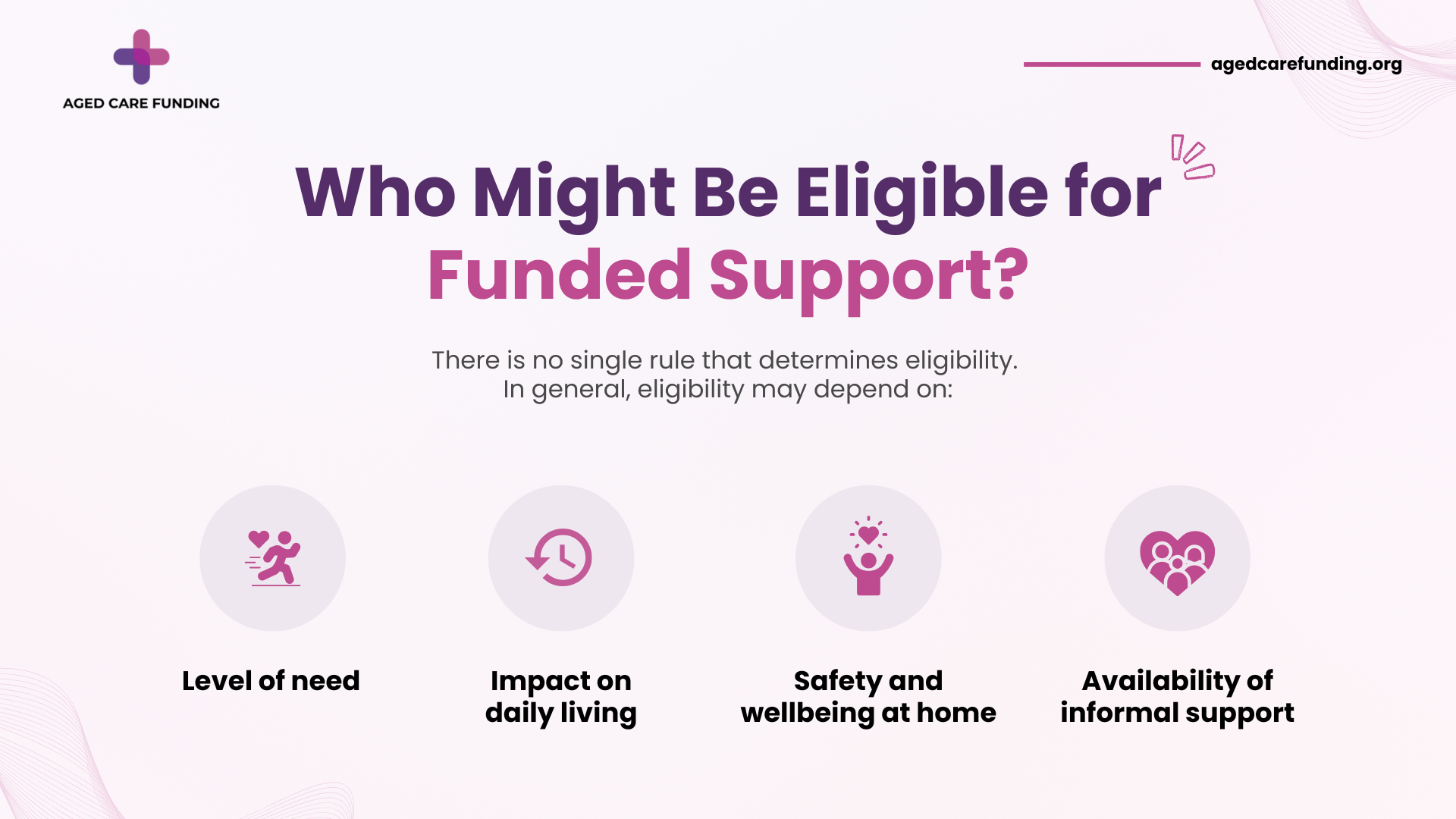
Who Might Be Eligible for Funded Support?
Age alone does not determine eligibility.
While many people receiving funded home care are older, eligibility is based on need, not age. Some people in their 80s may not qualify, while others younger than that may.
Eligibility can also change over time as circumstances change.
What About Short-Term Support After Hospital Discharge?
Some people may be eligible for short-term support following a hospital stay.
This type of support is often designed to:
- Assist with recovery
- Reduce the risk of readmission
- Help people regain independence
Short-term support is usually arranged around the time of discharge and may be reassessed once recovery progresses.
Not everyone discharged from hospital will qualify, and availability can depend on the individual situation.
Why So Many People Feel Confused About Eligibility
Many families report feeling unsure because:
- The system isn’t well explained
- Information is spread across multiple websites
- Eligibility criteria aren’t clearly defined
- People don’t know who to ask or where to start
It’s common for people to assume funding isn’t available to them — even when an assessment may be worthwhile.
This confusion is one of the reasons tools like eligibility checkers exist: to provide a clearer starting point.
What If Someone Isn’t Eligible for Funding?
Not everyone will qualify for government-funded home care. In some cases:
- Needs may not meet the threshold
- Support may be short-term only
- Circumstances may fall outside funding criteria
Understanding this early can still be helpful. Knowing where you stand allows families to plan, explore alternatives, and make informed decisions without uncertainty.
A Simple Starting Point: Check Eligibility First

Because eligibility depends on individual circumstances, there’s no single answer that applies to everyone.
If you’re unsure whether government-funded support may be available, using a free eligibility checker can help you:
- Understand which pathways might apply
- Learn whether a NASC assessment could be relevant
- Reduce uncertainty before taking next steps
It’s a starting point — not a decision — but for many people, it helps bring clarity to a confusing system.
Important Note
Information about aged care funding is general in nature. Eligibility depends on individual circumstances and usually requires formal assessment through the public health system.