Many people only start looking into aged care funding after something serious happens — a fall, a hospital stay, or a sudden decline in health. This leads to a common belief that funding is only available after a crisis.
In reality, while crises often trigger assessments, aged care funding is not designed only for emergencies. This article explains how early support fits into the New Zealand system, why people often wait too long, and how funding may be considered before a crisis occurs.
Why Funding Is Often Associated With Emergencies?
Aged care funding is frequently first mentioned during stressful moments, such as:
- A hospital admission or discharge
- A fall or injury at home
- A sudden change in mobility or cognition
- A health scare that raises safety concerns
Because of this timing, many families assume that a crisis is required before help is available.
What Aged Care Funding Is Actually Based On?
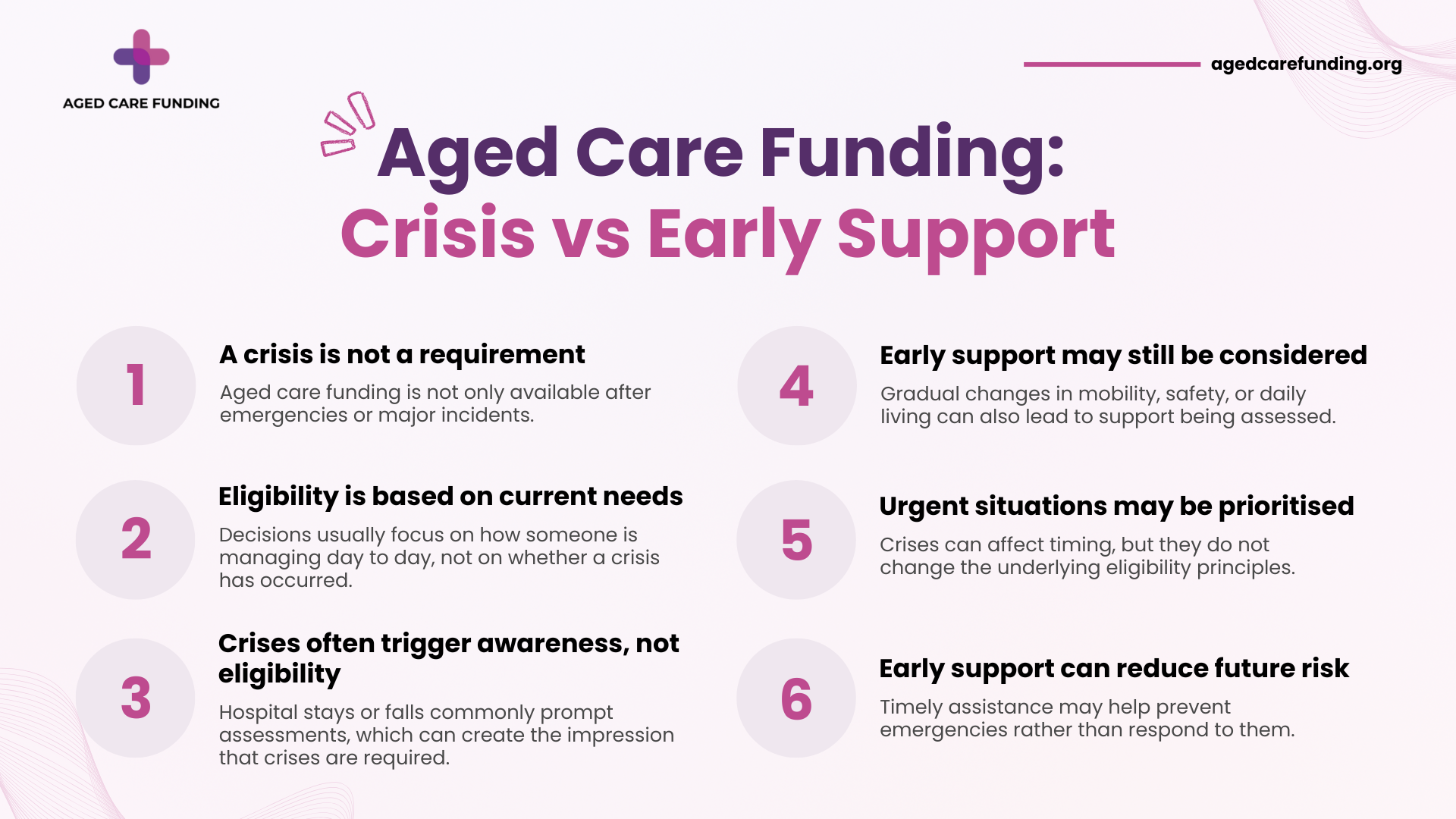
Eligibility for publicly funded home and community support is usually based on assessed need, not whether an emergency has occurred.
Most publicly funded aged care support in New Zealand is overseen by Te Whatu Ora – Health New Zealand and coordinated through Needs Assessment and Service Coordination (NASC) assessments.
Assessments look at how someone is managing in daily life, including safety, independence, and wellbeing — not just crisis events.
Can Support Be Considered Before a Crisis?
Yes.
Support may be considered when:
- Daily tasks are gradually becoming harder
- Balance or mobility is declining
- Fatigue is increasing
- Safety risks are emerging
- Family support is becoming strained
In these situations, early support may help reduce risk and prevent more serious issues later.
Why People Often Wait Too Long?
Many families delay exploring funding because they:
- Don’t want to “overreact”
- Feel unsure whether needs are serious enough
- Believe help is only for emergencies
- Hope things will improve on their own
Unfortunately, waiting until a crisis can make the situation more stressful and limit options.
How Crises Do Affect Timing?

While a crisis isn’t required, urgent situations are often prioritised.
After events such as hospitalisation or injury:
- Assessments may happen more quickly
- Short-term support may be offered
- Safety planning becomes more urgent
This prioritisation can reinforce the idea that emergencies are the only pathway — even though they aren’t.
The Role of Early Support
Early or preventative support is often focused on:
- Reducing safety risks
- Supporting recovery or declining function
- Maintaining independence at home
- Easing pressure on family carers
Small amounts of timely support can sometimes prevent larger problems later.
A Safer Way to Explore Options
Because eligibility depends on current circumstances, many people find it helpful to explore funding before a crisis occurs.
A free eligibility checker can help:
- Identify whether early support pathways may apply
- Reduce uncertainty about whether it’s “too early”
- Support informed planning rather than reactive decisions
It’s designed as a starting point, not a trigger for immediate action.
Important Note
Information about aged care funding is general in nature. Eligibility and outcomes depend on individual circumstances and usually require formal assessment through the public health system. Support availability can change over time.