If you’re trying to understand aged care funding in New Zealand, one question comes up again and again: Do you need a NASC assessment to access support?
For many families, the answer feels unclear. The system isn’t always well explained, and people often hear about NASC only after a hospital stay or a sudden change in health. This article explains what a NASC assessment is, when it’s usually required, and why it plays such a central role in accessing government-funded home care.
What Is a NASC Assessment?

NASC stands for Needs Assessment and Service Coordination. NASC organisations are responsible for assessing whether a person may be eligible for publicly funded aged care support.
A NASC assessment is not a test and not an application for funding. It is a structured way to understand how someone is managing at home and whether additional support may be appropriate.
Most government-funded aged care support in New Zealand is coordinated through Te Whatu Ora – Health New Zealand, with NASC organisations acting as the main entry point.
Is a NASC Assessment Always Required?
In most situations, yes.
If someone is seeking ongoing, government-funded home care support, a NASC assessment is usually required before funding can be considered.
This is because funding decisions are based on assessed need, rather than age, diagnosis, or personal circumstances alone. The assessment helps determine:
- Whether support may be available
- What type of support might be appropriate
- Whether the situation meets eligibility criteria
That said, not all support pathways work in exactly the same way, and some short-term services may be arranged differently.
When Might a NASC Assessment Be Suggested?
A NASC assessment is often suggested when:
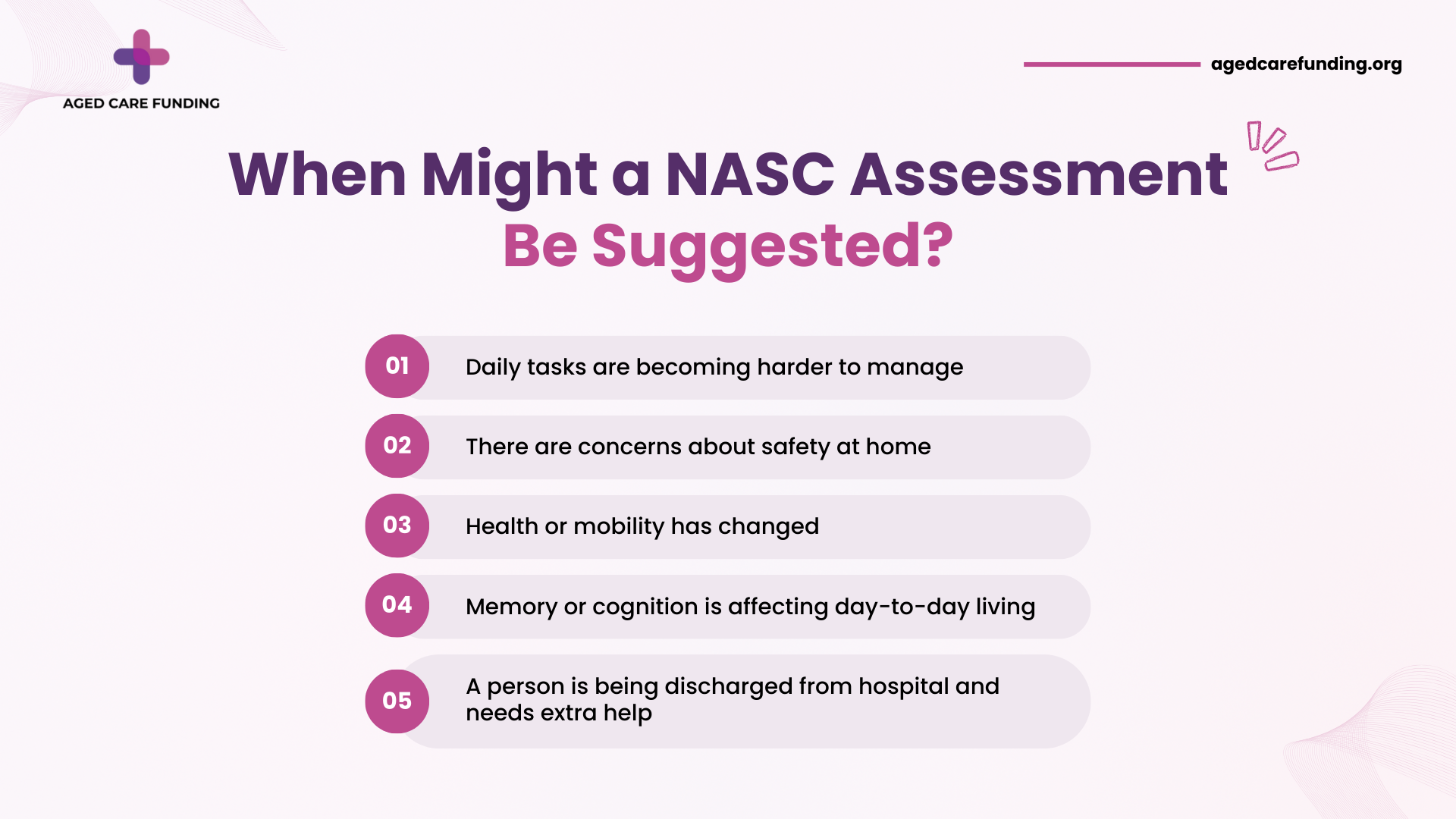
In many cases, families don’t actively request an assessment. Instead, it may be recommended by a health professional, hospital team, or community service.
What Happens During a NASC Assessment?
A NASC assessment focuses on understanding the person’s overall situation. It usually looks at how someone is managing now, rather than what they might need in the future.
The assessor may ask about:
- Mobility and physical health
- Ability to manage personal care
- Daily activities such as meals or household tasks
- Cognitive changes
- Support already provided by family or friends
- Safety risks in the home
Assessments are often carried out in the home, but may also be done by phone, depending on circumstances.
Does a NASC Assessment Guarantee Funding?
No. Having a NASC assessment does not guarantee that funded support will be offered.
The assessment helps determine whether someone meets eligibility criteria at that point in time. Possible outcomes can include:
- Short-term support
- Ongoing support
- No funded support offered
For many families, understanding this upfront helps reduce disappointment or confusion later.
What About Short-Term Support After Hospital Discharge?
Some people receive short-term support following a hospital stay, sometimes called transitional or post-discharge support.
This type of support may be arranged:
- To help with recovery
- To reduce the risk of readmission
- To support a safe return home
In these situations, a NASC assessment may still be involved, although timing and processes can vary. Short-term support is usually reviewed and does not automatically lead to long-term funding.
Why NASC Can Feel Confusing?

Many people feel uncertain about NASC because:
- The role isn’t well explained
- Information is spread across different sources
- The process often starts during stressful times
- Eligibility criteria aren’t clearly defined
It’s common for families to feel unsure whether requesting an assessment is worthwhile, or to assume they won’t qualify without checking.
A Helpful First Step: Understanding Eligibility
Because eligibility depends on individual circumstances, many people find it useful to start with a general eligibility check before pursuing formal assessments.
A free eligibility checker can help you:
- Understand whether a NASC assessment might be relevant
- Learn which funding pathways may apply
- Reduce uncertainty before taking next steps
It’s designed as a starting point — not a decision — and can help you feel more prepared when navigating the system.
Important Note
Information about aged care funding is general in nature. Eligibility usually depends on individual circumstances and requires formal assessment through a NASC organisation. Support availability can change over time.