Leaving hospital can be a relief — but it can also raise new questions. Many families find that once their parent or loved one is home, they’re unsure what help might be available, how long it lasts, or who organises it.
If you’re feeling uncertain after a hospital stay, you’re not alone. Support pathways can be difficult to understand, especially when recovery looks different for everyone. This article explains the types of support that may be available after a hospital stay in New Zealand, how they’re usually arranged, and where people often start when trying to understand eligibility.
Why Support After Hospital Discharge Matters?

Hospital care focuses on treating an immediate medical issue. Once that treatment is complete, the goal is often to help someone return home safely and recover as well as possible.
However, many people find that after discharge:
- Mobility is reduced
- Fatigue is higher than expected
- Daily tasks feel harder to manage
- Extra help is needed, at least temporarily
Post-hospital support is designed to bridge this gap and reduce the risk of complications or readmission.
Who Coordinates Post-Hospital Support?
Most hospital-based and community support is overseen by Te Whatu Ora – Health New Zealand.
When someone is discharged, hospital teams may look at whether short-term support could help with recovery at home. In many cases, this involves referral to community services and, where appropriate, a Needs Assessment and Service Coordination (NASC) organisation.
NASC organisations help assess whether funded support may be appropriate based on the person’s situation at that time.
What Types of Support May Be Available After Hospital?
Support following a hospital stay is often short-term and focused on recovery. What’s offered can vary depending on individual needs, location, and circumstances.
Support may include help with:
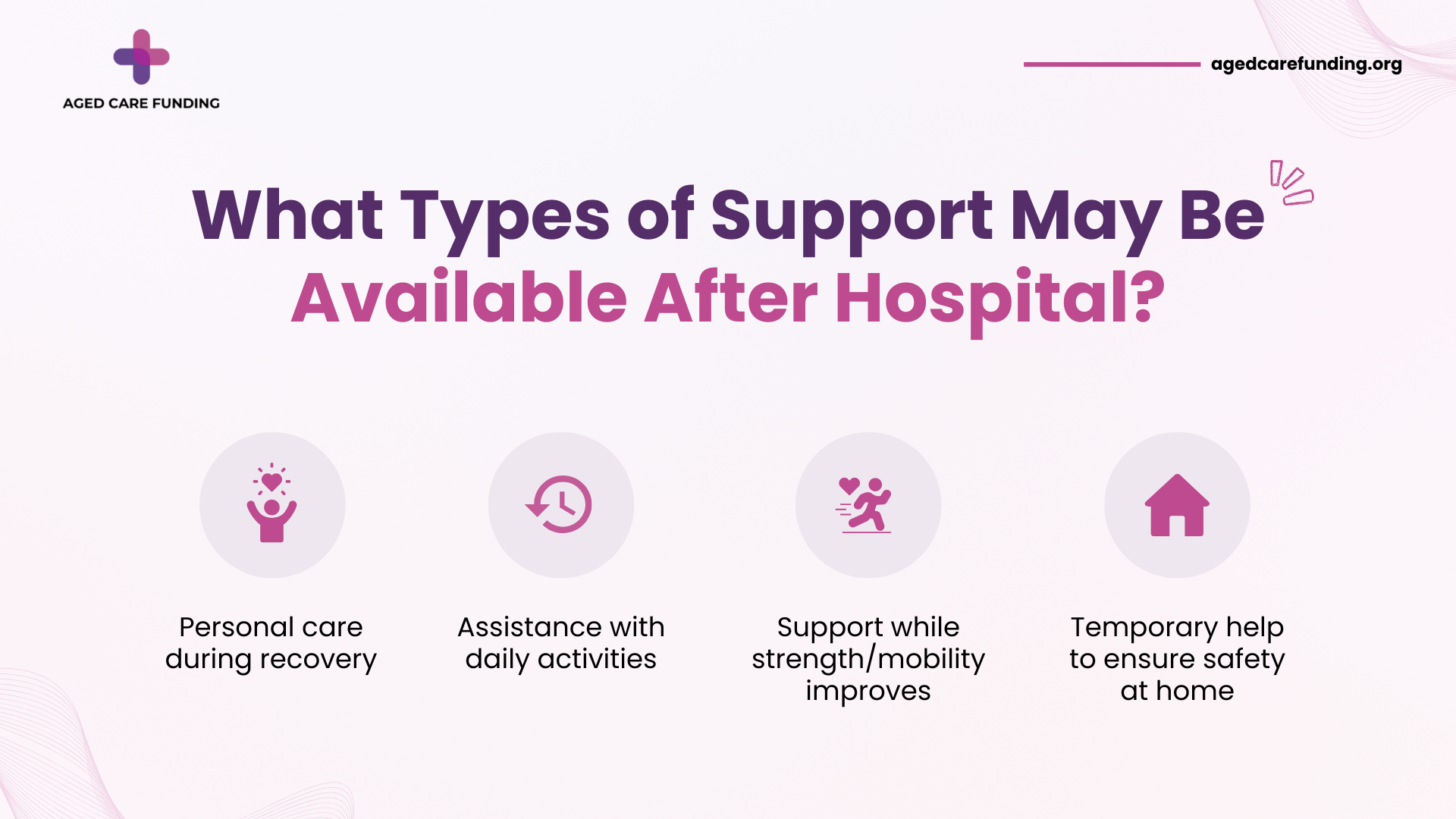
This type of support is usually reviewed after a set period and does not automatically continue long-term.
Is Post-Hospital Support Automatic?
No. Not everyone leaving hospital will receive funded support.
Whether support is offered often depends on:
- How independent the person is at discharge
- Whether there are safety concerns at home
- How recovery is expected to progress
- What support is already available from family or others
Hospital staff may discuss options before discharge, but this doesn’t always happen clearly — which is why many families feel unsure once they’re home.
How Long Does Post-Hospital Support Last?
Post-hospital support is usually time-limited.
It may last:
- A few days
- A few weeks
- Until recovery reaches a certain point
Support is typically reviewed and may be adjusted or stopped once it’s no longer considered necessary. In some situations, further assessment may be suggested if needs continue.
Does Post-Hospital Support Lead to Ongoing Funding?
Not always.
Short-term support after hospital discharge does not automatically lead to long-term funded care. If ongoing needs are identified, a further assessment may be required to determine whether longer-term support may be appropriate.
For some people, recovery progresses well and no further support is needed. For others, the hospital stay highlights ongoing challenges that weren’t obvious before.
Why Families Often Feel Unclear After Discharge

Many families say they feel confused because:
- Information is given quickly during discharge
- Different services are involved
- Terminology isn’t explained clearly
- Expectations about recovery aren’t always discussed
It’s common to leave hospital without a clear picture of what support is temporary, what might continue, and what steps come next.
A Helpful Starting Point If You’re Unsure
If you’re not sure whether post-hospital support applies — or whether further help may be available — starting with a general eligibility check can help provide clarity.
A free eligibility checker can help you:
- Understand which support pathways may apply after discharge
- Learn whether a NASC assessment could be relevant
- Reduce uncertainty before pursuing further steps
It’s designed to help you understand the landscape, not to make decisions or guarantees.
Important Note
Information about post-hospital support is general in nature. Availability and eligibility depend on individual circumstances and usually involve assessment through the public health system. Support arrangements can change as recovery progresses.