For many families, the period after a NASC assessment can feel like a waiting game. People often ask what happens next, how decisions are made, and whether they’ll hear back quickly or at all.
This article explains what usually happens after a NASC assessment is completed, why outcomes can vary, and what families typically experience in the weeks that follow.
Why the Post-Assessment Stage Feels Unclear?
NASC assessments often take place during stressful periods — illness, recovery, or growing concern about safety at home. Once the assessment is over, families may be left wondering:
- When they’ll hear back
- What the assessment leads to
- Whether no news means no support
- What decisions are being made behind the scenes
Because communication varies, this stage can feel particularly uncertain.
What a NASC Assessment Is Used For
A NASC assessment gathers information about how someone is managing at a specific point in time.
Most publicly funded home and community support in New Zealand is overseen by Te Whatu Ora – Health New Zealand, with eligibility assessed through Needs Assessment and Service Coordination (NASC) organisations.
After the assessment, the information collected is used to consider whether:
- Funded support may be appropriate
- Support should be short-term or ongoing
- Current needs meet eligibility criteria
Possible Outcomes After an Assessment
After an assessment, several outcomes are possible. These may include:
- Funded support being offered
- Short-term or transitional support being arranged
- No funded support being offered at that time
- A recommendation for review or reassessment later
Outcomes depend on assessed need, safety considerations, and individual circumstances.
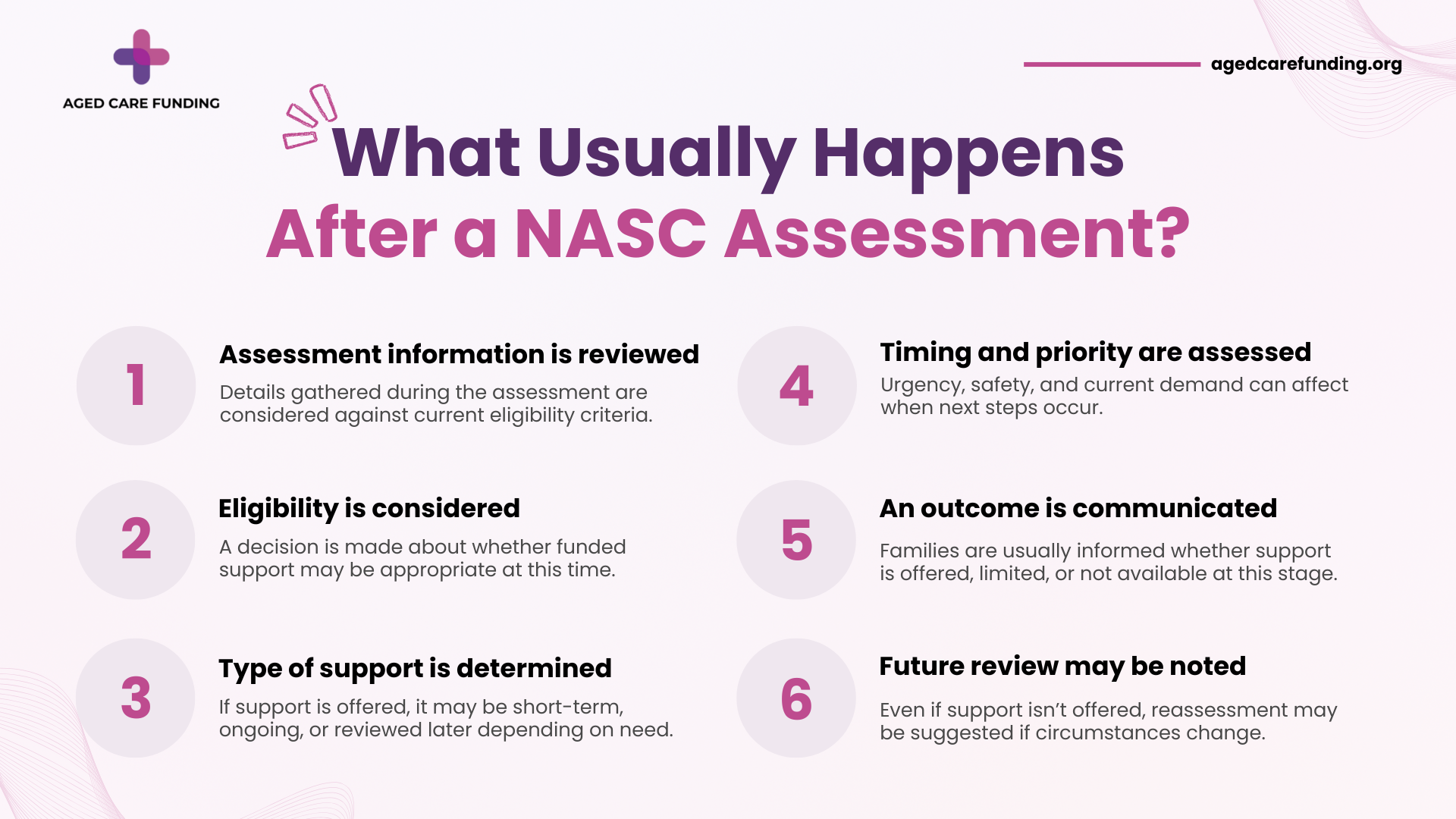
Why Outcomes Can Take Time?
Decisions are not always immediate. Time may be needed to:
- Review assessment information
- Confirm eligibility criteria
- Coordinate next steps
- Prioritise based on urgency
Waiting does not necessarily indicate a negative outcome — it often reflects process and capacity.
What If Support Is Offered?
If support is offered, families are usually informed about:
- The type of support being considered
- Whether it is short-term or ongoing
- When support may start
- How and when it may be reviewed
Details can vary depending on the situation and location.
What If Support Is Not Offered?
If funded support is not offered, it does not mean:
- Concerns were dismissed
- The situation isn’t taken seriously
- Support will never be available
It usually reflects assessed need at that time. Circumstances can change, and reassessment may be appropriate later.
Why Communication Can Feel Limited

Families often expect a clear “yes or no” straight away. In reality:
- Information may be shared gradually
- Decisions may involve multiple steps
- Timeframes can vary
This lack of clarity can be frustrating, but it is a common part of the process.
A Helpful Way to Regain Clarity
Because outcomes depend on individual circumstances, many people find it helpful to revisit a general eligibility check while waiting or after receiving an outcome.
A free eligibility checker can help:
- Clarify which pathways may apply
- Provide context for assessment outcomes
- Reduce uncertainty about next steps
It’s designed as a starting point, not a replacement for formal decisions.
Important Note
Information about post-assessment outcomes is general in nature. Eligibility decisions and timelines depend on individual circumstances and formal processes within the public health system.