Many families worry that accessing aged care funding could negatively affect other support they already receive — or might need in the future. This uncertainty often stops people from exploring eligibility at all.
In reality, aged care funding and other forms of government support usually sit alongside each other, rather than replacing one another. This article explains how aged care funding typically fits with other support in New Zealand and why fear of “losing something else” is common but often misplaced.
Why This Concern Is So Common?
When navigating any government system, people naturally worry about unintended consequences. Families often ask:
- “Will this affect other support Mum receives?”
- “Could this change future entitlements?”
- “What if we lose something we already have?”
Because information is rarely explained clearly in one place, many people assume different supports are linked in ways they aren’t.
How Aged Care Funding Is Usually Assessed?

Publicly funded aged care support is generally based on assessed need, not on what other support someone may already receive.
Most aged care funding for home and community support is overseen by Te Whatu Ora – Health New Zealand, with eligibility assessed through Needs Assessment and Service Coordination (NASC) processes.
The assessment focuses on:
- Daily living needs
- Safety at home
- Functional ability
- Support already in place
It is not designed to review or reassess unrelated government support.
Are Different Types of Support Automatically Linked?
Generally, no.
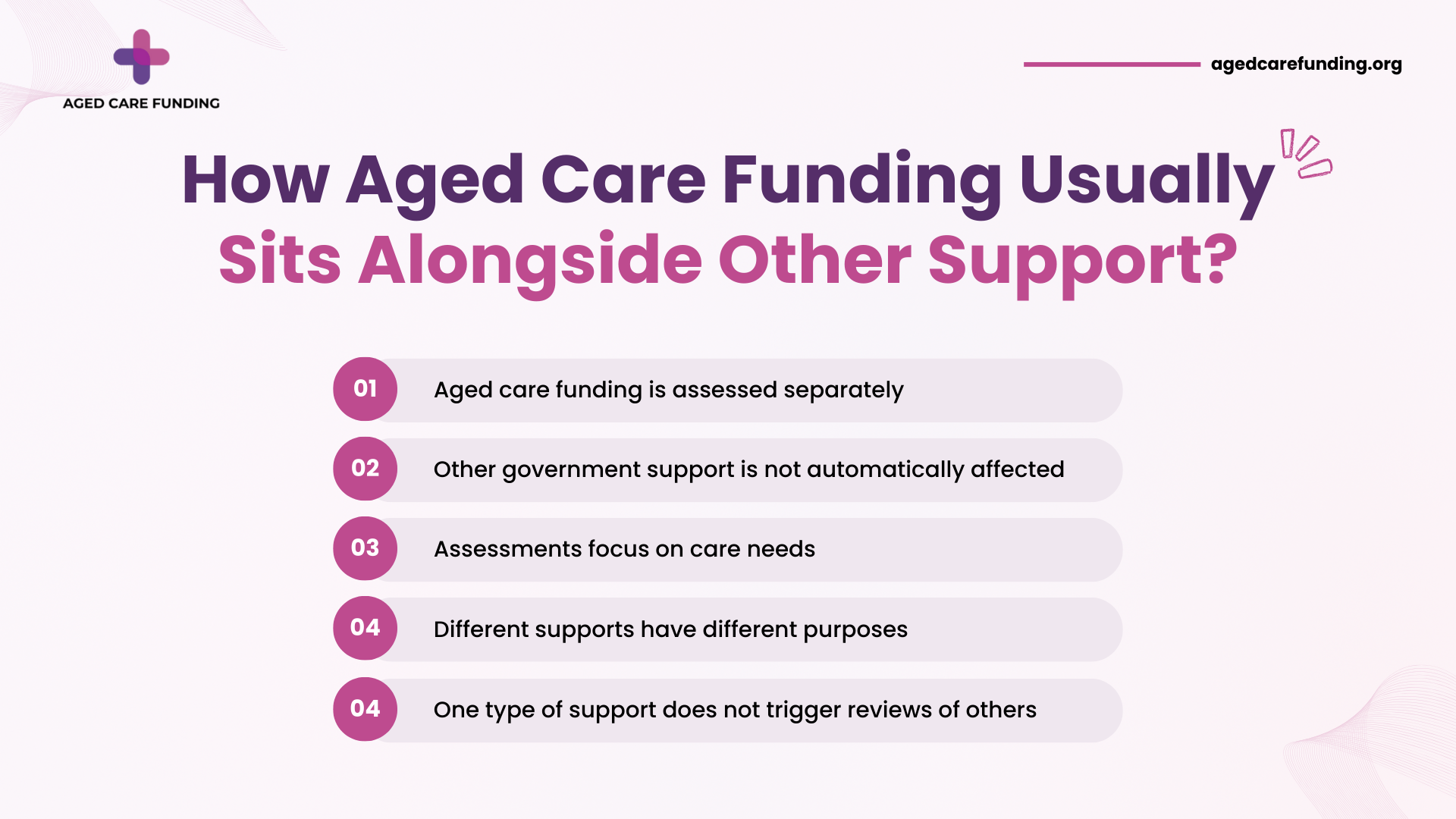
Aged care funding is usually assessed separately from:
- Income support
- Superannuation
- Disability-related assistance
- Other non-care-related support
Receiving one type of support does not automatically cancel or replace another.
Why People Fear Losing Other Support?
This fear often comes from:
- Lack of clear information
- Past experiences with complex systems
- Confusing terminology
- Stories or assumptions shared by others
Without clear explanations, people may avoid seeking help to “be safe,” even when that help could be beneficial.
What Is Considered During an Aged Care Assessment?
During an assessment, the focus is usually on:
- How someone is managing day to day
- Whether support is needed to remain safe at home
- What informal support is already in place
The assessment is not intended to reassess unrelated entitlements or trigger reviews of other government support.
Why Support Is Designed to Complement, Not Replace?
Aged care support is often intended to:
- Fill gaps where daily living has become harder
- Reduce safety risks
- Support independence
- Ease pressure on family support
It is usually one part of a broader support picture, rather than a replacement for everything else.
A Calmer Way to Explore Eligibility
Because eligibility decisions are based on individual circumstances, many people find it helpful to start with a general eligibility check before making assumptions.
A free eligibility checker can help:
- Clarify whether aged care funding pathways may apply
- Reduce fear about unintended consequences
- Support informed conversations and planning
It’s designed as a starting point, not a commitment or decision.
Important Note
Information about how aged care funding interacts with other government support is general in nature. Eligibility and outcomes depend on individual circumstances and usually require formal assessment through the public health system.