One of the most common assumptions families make about aged care funding is that it’s based on income or assets. Many people believe that if they own a home, have savings, or are still financially independent, they won’t qualify for any support at all.
In reality, aged care funding in New Zealand doesn’t work in a simple pass-or-fail way based on finances alone. This article explains how income and assets fit into the system, what funding decisions are usually based on, and why many people rule themselves out too early.
Why This Question Comes Up So Often?

Questions about money tend to surface early because families are trying to make quick decisions under pressure. A hospital stay, a health change, or growing safety concerns can suddenly force people to look for help they’ve never needed before.
At that point, it’s common to hear:
- “We won’t qualify because Mum owns her home.”
- “Dad has savings, so there won’t be any funding.”
- “Funding is only for people with no assets.”
These assumptions are understandable — but they don’t always reflect how eligibility is actually considered.
What Aged Care Funding Is Usually Based On?
For home-based aged care support, funding decisions are primarily based on assessed need, not financial status.
Most publicly funded home and community support in New Zealand is overseen by Te Whatu Ora – Health New Zealand and accessed through a Needs Assessment and Service Coordination (NASC) assessment.
The focus of a NASC assessment is typically on:
- How someone is managing day to day
- Whether there are safety risks at home
- The impact of health or mobility changes
- The level of support already available
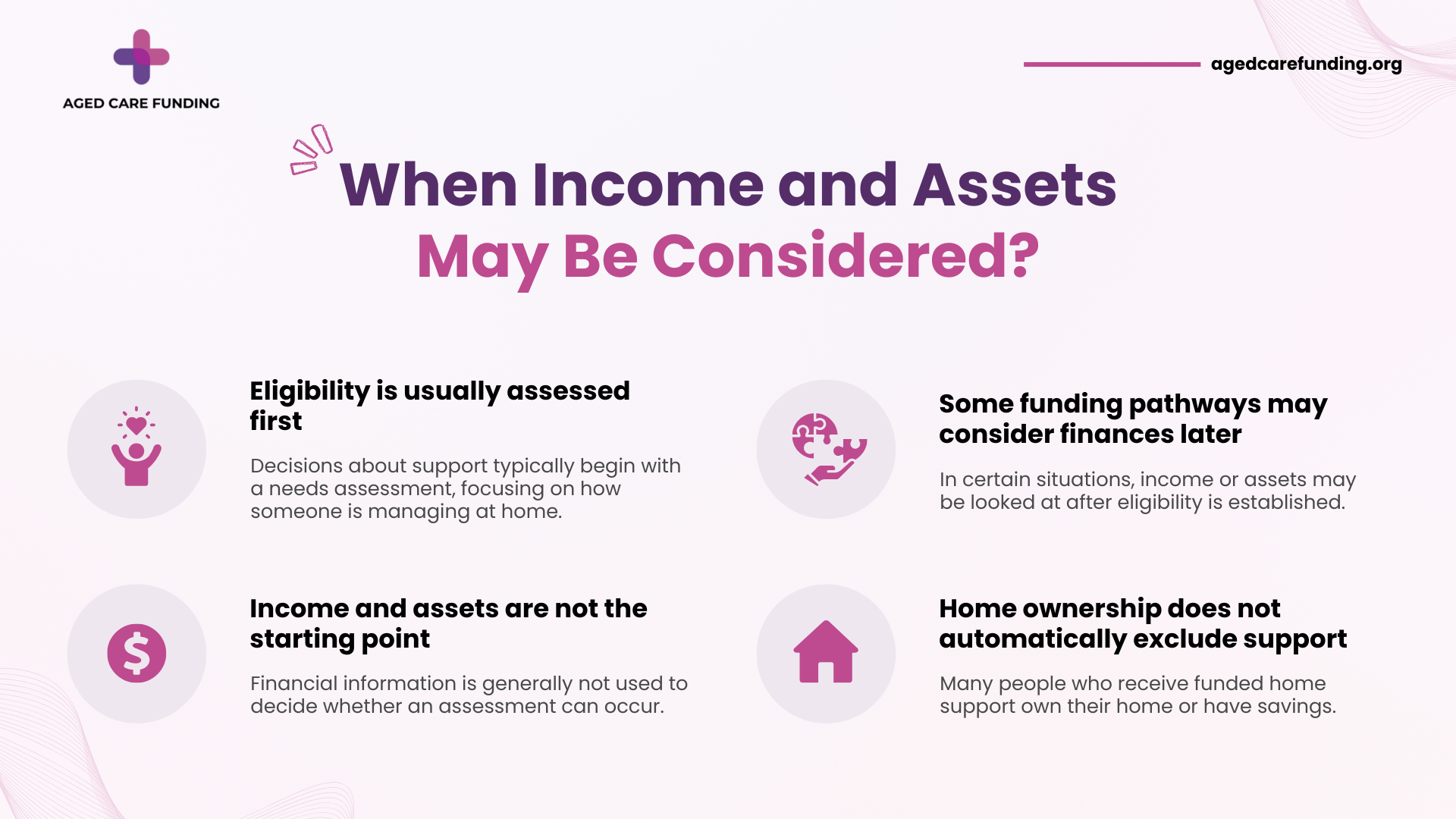
Income and assets are not usually the starting point for determining whether support may be available.
Does Owning a Home Automatically Rule Someone Out?
No. Owning a home does not automatically exclude someone from receiving government-funded home care support.
Many people who receive funded support:
- Own their home
- Have some savings
- Live independently but need help with certain tasks
Eligibility is usually assessed on how well someone is coping at home, rather than what they own.
Are Income and Assets Ever Considered?
In some situations, financial information may be considered after eligibility is established, depending on the type of support and the pathway involved.
However, for most people exploring home-based support, the first step is understanding whether there is an assessed need — not whether income or assets fall above or below a specific level.
Because processes can vary, this is another area where confusion is common.
Why Financial Assumptions Can Be Unhelpful?
Ruling yourself out based on income or assets alone can mean:
- Missing out on short-term support after a hospital stay
- Delaying help that could improve safety at home
- Carrying unnecessary stress or uncertainty
Many families later discover that an assessment could have been worthwhile, even if they initially assumed funding wouldn’t apply to them.
What About Support After a Hospital Stay?
Short-term support following hospital discharge is often focused on recovery and safety rather than financial circumstances.
Whether support is offered usually depends on:
- How independent someone is at discharge
- Whether there are risks at home
- How recovery is expected to progress
This type of support is usually time-limited and reviewed as recovery continues.
Why the System Feels Unclear?

The aged care funding system can feel opaque because:
- Eligibility criteria aren’t always clearly published
- Different funding pathways exist
- Financial rules differ between types of care
- Information is scattered across multiple sources
As a result, many people rely on assumptions rather than clear explanations.
A Better Place to Start
Because eligibility is often about need rather than finances, many people benefit from starting with a general eligibility check instead of trying to self-assess based on income or assets.
A free eligibility checker can help you:
- Understand whether funding pathways may apply
- See whether an assessment might be relevant
- Reduce uncertainty before taking further steps
It’s designed to provide clarity, not to make decisions or guarantees.
Important Note
Information about aged care funding is general in nature. Eligibility depends on individual circumstances and usually requires formal assessment through the public health system. Financial considerations, where relevant, are handled as part of specific processes and may differ by situation.